
Chemicals
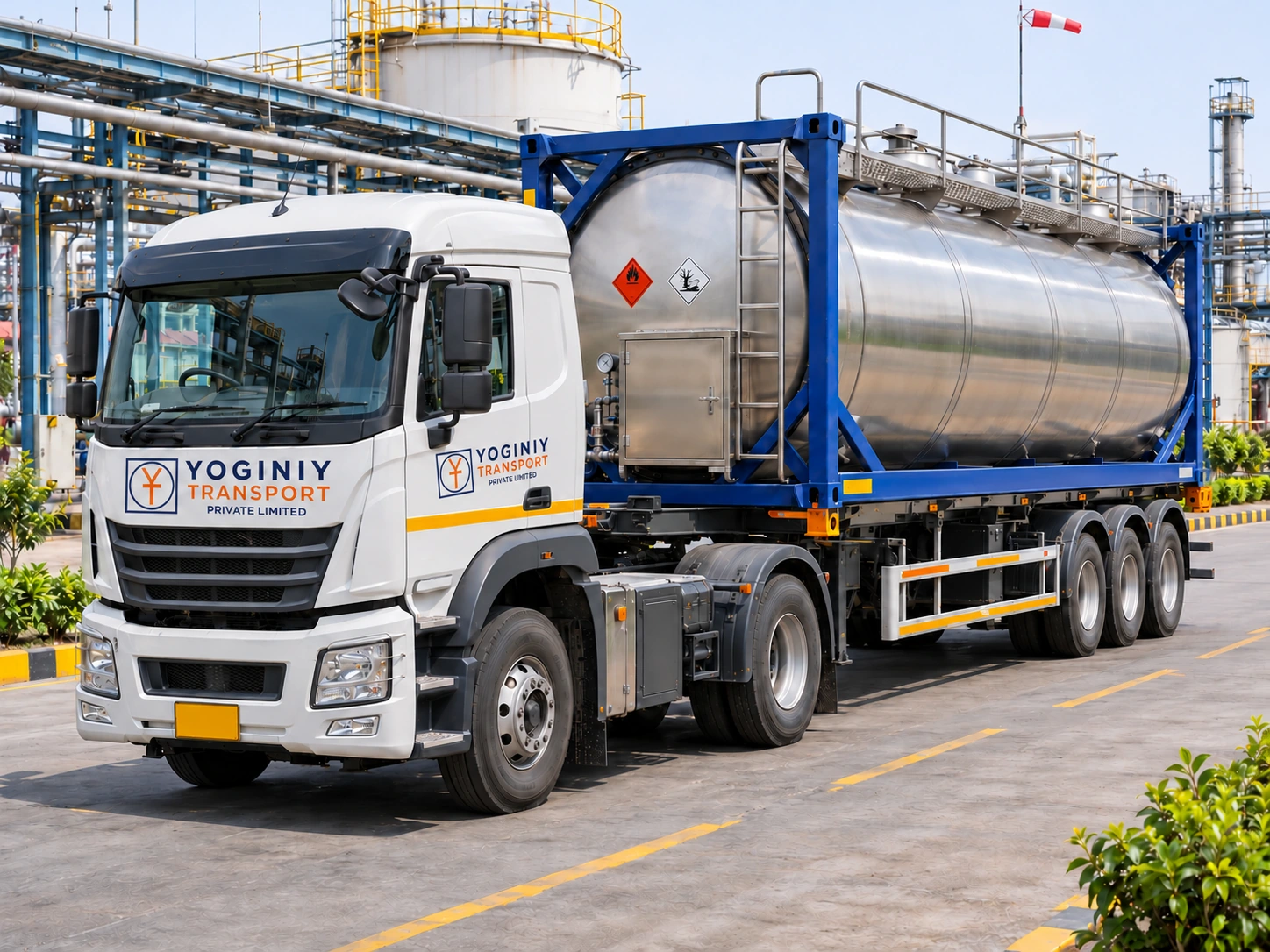
DG-certified transport for industrial chemicals, solvents, acids, and reactive materials — compliant vehicles, documented SOPs, and 24/7 emergency protocols across India.
[ The Logistics Challenge ]
[ Supply Chain Journey ]
How Chemicals Cargo Moves
[ Solutions We Deploy ]
How We Serve Chemicals
[ What We Move ]
Cargo Types
- Industrial Solvents (Class 3)
- Acids and Alkalis (Class 8)
- Oxidising Substances (Class 5)
- Compressed Gases (Class 2)
- Flammable Solids (Class 4)
- Toxic Substances (Class 6)
- Agro-Chemicals
- Petrochemicals
IMDG and CMVR Compliance
All Yoginiy dangerous goods movements for chemical cargo comply with IMDG Code requirements as adopted under Central Motor Vehicles Rules. Vehicle placarding, documentation, driver certification, and emergency response information are maintained per regulatory requirements. Optional shipment-based transit or marine cargo insurance can be arranged on request, subject to insurer acceptance, policy terms, limits and exclusions. Enquiries: info@yoginiy.com.
[ Chemical Logistics — FAQ ]
Frequently Asked Questions
Chemical logistics combines cargo-specific road transport, storage and handling with classification review, documentation, suitable equipment and task-specific trained personnel. Yoginiy provides dangerous goods road logistics for Classes 2–9, supported by DG-trained and certified management and operations staff. Each shipment is assessed for its classification, packaging, documentation, vehicle suitability and assigned handling tasks, with planning for loading, unloading and transit safety.
Yoginiy Transport handles industrial solvents (Class 3), acids and alkalis (Class 8), oxidising substances (Class 5), compressed gases (Class 2), flammable solids (Class 4), toxic substances (Class 6), agro-chemicals, and petrochemicals. Each cargo type is handled according to its hazard class requirements, with appropriate vehicles, documentation, and SOPs.
Dangerous goods (DG) logistics is the specialist transport and handling of materials classified as hazardous under IMDG Code and Central Motor Vehicles Rules (CMVR) — including flammable liquids, corrosives, oxidisers, compressed gases, toxic substances, and reactive materials. DG logistics requires certified drivers, correctly placarded vehicles, class-specific SOPs, and emergency response information on every shipment.
Yes. Chemical shipments frequently involve cargo spanning multiple IMDG hazard classes — for example, a consignment containing flammable liquids (Class 3) and corrosives (Class 8). Yoginiy Transport's DG logistics capability covers Class 2, 3, 4, 5, 6, and 8, including mixed-class shipments with appropriate segregation and documentation.
Every DG movement includes a documented SOP for the specific hazard class, an Emergency Response Information Sheet, vehicle placarding per IMDG and CMVR requirements, and driver certification records. Documentation is maintained per regulatory requirements and is available for inspection at any point during transit.
Yoginiy provides dangerous goods road logistics for Classes 2–9, supported by DG-trained and certified management and operations staff. Each shipment is assessed for its classification, packaging, documentation, vehicle suitability and assigned handling tasks, with planning for loading, unloading and transit safety.
Yes. Flammable liquids (Class 3), corrosives including acids and alkalis (Class 8), and toxic substances (Class 6) are within the DG classes handled. Secondary containment is used for corrosive and toxic cargo. Each movement is operated under a documented SOP specific to the hazard class.
Yes. Port-adjacent warehousing at Mundra and Mumbai is available for chemical import and export staging. This supports buffer storage for chemical cargo between manufacturing, port dispatch, and distribution to industrial end users. Specific storage requirements for particular hazard classes should be confirmed at the enquiry stage.
Yoginiy’s expert packing teams work with ISPM 15-authorised partners under MOU arrangements. Applicable wood treatment and IPPC marking are carried out under the partner’s authorisation, with the relevant treatment and marking records supplied for the agreed packaging scope. Protective packing and VCI packaging can be specified for machinery and metal components.
Use the Chemical Logistics Quote button on this page or contact info@yoginiy.com directly. Please include the chemical name or description, UN number and hazard class if known, route, volume, and any specific handling or documentation requirements. A logistics specialist will respond within 24 hours.
[ Ready to Talk? ]